
























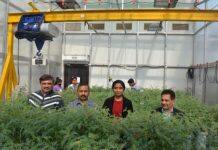
Students break down borders for crop heat and drought research
Two postgraduate candidates at The University of Western Australia’s Institute of Agriculture have overcome numerous challenges of the pandemic to conduct research from almost 8000km away in India.

Waikato climate researchers develop device sold to universities around the world
Waikato researchers unlocking keys to climate change hidden in the drip water from inside New Zealand’s deepest caves, have developed a new device being used by researchers around the world.
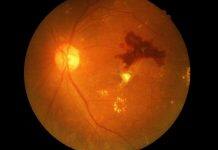
Discovery of a new drug for diabetic retinopathy
A potentially effective treatment for diabetic retinopathy, a disease that swells and scars the retina, has been developed by an Université de Montréal scientist and...
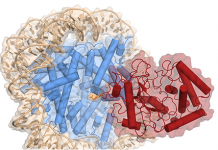
How cGAS is kept bottled up
In higher organisms, detection of DNA in the cytoplasm triggers an immune reaction.

Hormone found to regulate mothers’ behaviour
University of Otago researchers have discovered a new function for the hormone prolactin – it limits a new mum’s investment in aggressive behaviour and instead focusses them on interacting with their babies.

Adventures, business and lessons from lockdown
Some people are born relentlessly positive. At first, Jamie Fitzgerald seems like one of those people, but after a while you get the sense there’s more to his enthusiasm than just blind positivity, but a bit of strategy too.

University shines bright for Illuminate Adelaide
Illuminate Adelaide lights up the cityscape this July, with the University of Adelaide playing host to a selection of highlights.

Wave modelling important to predict climate change’s effect on sea ice
University of Adelaide researchers have developed a new theoretical model to predict the distances ocean waves can travel to break up sea ice.

Researchers link NBA playing style to knee injury
Basketball players who weave through defense to shoot the basket face a higher risk of tears in the anterior cruciate ligament (ACL), but after repair return to the same level of play.
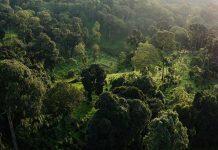
Forests are vital to help reduce atmospheric CO2
If the world’s natural forests are allowed to grow and mature rather than being cut down, 226 billion tonnes of carbon could be taken out of the atmosphere, according to a major international study.