



















Expert collaboration informs wildcat conservation
Five-year project assesses Scottish wildcat population and proposes measures to safeguard the species.

Unintended methane release from UK shale gas site equivalent to 142 trans-Atlantic flights
Fracking operations at a site in Blackpool, UK, have caused an unintended release of methane gas into the atmosphere...

Biology undergraduate awarded research opportunity at McMaster and Guelph
A unique research award is giving an undergrad the opportunity to collaborate with McMaster and University of Guelph researchers studying a pathogen that causes infections in both humans and animals.

Quality teaching spurs jump in Times subject rankings
The University of Sydney has improved or maintained its performance in ten out of the eleven subjects ranked in the latest Times Higher Education subject rankings.

UQ responds to housing market with new student residences project
A second student residences complex is planned for The University of Queensland’s St Lucia campus to help address a shortage of suitable and affordable rental accommodation.

Cambridge-led SARS-CoV-2 genomic surveillance consortium receives £12.2 million
The COVID-19 Genomics UK (COG-UK) Consortium has been backed by the Department for Health and Social Care Testing Innovation Fund to expand whole genome...

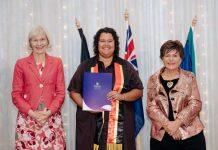
Soprano Larissa Kent awarded significant overseas study scholarship
School of Music alumna Larissa Kent has been awarded a 2023 Kia Ora Foundation Patricia Pratt Scholarship to support her study at the San Francisco Conservatory of Music (SFCM).

Faculty Recruitment: Peking University, Guanghua School of Management
Grounded in the rich cultural legacy of Peking University, the Guanghua School of Management is proud to be at the forefront of business and economics research in China.

Researchers aim to help improve women’s wellbeing after breast cancer
Experts at Newcastle University are developing a better way to help women make healthy lifestyle choices after breast cancer treatment.

Wallace prizewinner no flash in the pan
A writer of flash fiction, extremely short stories, has won the University of Auckland’s $5000 Sir James Wallace Creative Writing Prize for the first time.