


















New £2.8 million research programme to improve lives of children and families
LSE will take part in a major research programme, awarded £2.8 million by the Nuffield Foundation, to improve the lives of children and families by better understanding their needs and experiences.

Suicide rate higher for people with autism
University of Queensland-led research has found people on the autism spectrum are almost 3 times more likely to die by suicide compared to non-autistic people.
Undergraduate quantum science research fellowship launches
The Open Quantum Initiative (OQI), a working group of students, researchers, educators, and leaders across the Chicago Quantum Exchange (CQE)...

QUT design leaders and innovators win Good Design Awards
Two QUT initiatives, one bridging the divide between academia and industry and another placing QUT at the global forefront of design education, have been recognised in the 2024 Australian Good Design Awards.

UM scholar’s article on environmental economics published in top international journal
A research article co-authored by Aileen Lam, an assistant professor in the Department of Economics, Faculty of Social Sciences, University of Macau (UM)...

Study finds every week counts in preventing perinatal deaths
New research from The University of Western Australia has revealed which gestational week of birth carries the lowest risk of perinatal death.

Dominik Wehr got a Young Talent Award
Dominik Wehr who has recently started his PhD studies in Logic at the Department of Philosophy, Linguistics and Theory of Science has received an award from The Royal Holland Society of Sciences and Humanities.
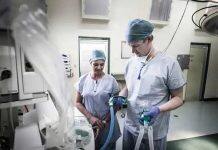
UOW’s end-to-end rural medical program is designed to encourage graduates to work in rural...
The University of Wollongong (UOW) Southern Highlands will welcome its first cohort of 12 medical students to its Moss Vale campus in January 2025.
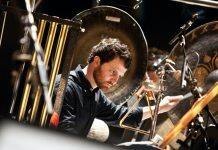
Percussionist scores in arts funding round
University of Canterbury Senior Lecturer in Music Performance, percussionist Dr Justin DeHart, will commission five new works for solo percussion from five prominent composers, thanks to a $74,000 Creative New Zealand Arts grant.

Australia’s productivity problem is no easy fix
New innovations and technological advances are needed to lift Australia’s flagging growth and productivity writes Roy Green.