














Griffith University central in world leading water security index
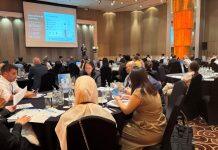
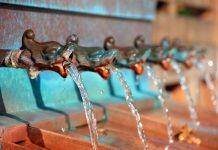
Griffith University researchers were central in developing the Asian Development Bank’s world leading water security index, the Asian Water Development Outlook (AWDO) 2020, released the past week.
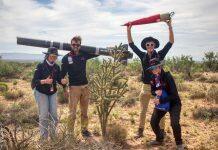
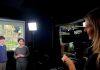
Student aerospace team rockets to success in US
A team of Canterbury students are coming back to earth after building and launching a winning rocket 10km into the sky at an international aerospace competition.

Diamonds are a cell’s best friend
Scientists have used tiny diamonds, or nanodiamonds, to measure heat transfer inside living cells, potentially leading to new diagnostic tools and therapies for cancer.
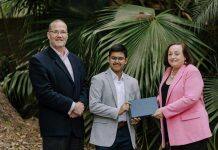
Shaurya Kansal receives prestigious VC Leadership Scholarship at University of Wollongong
Shaurya Kansal, a driven and innovative young mind hailing from Meerut, India, has been awarded a highly esteemed Vice-Chancellor’s Leadership Scholarship from the University of Wollongong (UOW).

Methane emissions from abandoned oil and gas wells underestimated
A recent McGill study published inEnvironmental Science and Technology finds that annual methane emissions from abandoned oil and gas (AOG) wells in Canada and the US...
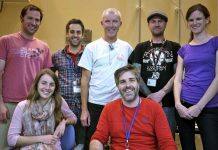
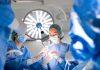
Prestigious awards recognise medical technological innovation
Cutting-edge medical research carried out at the University of Adelaide has been awarded prizes for excellence in the prestigious 2023 Australian Museum Eureka Prizes.

3Q: Looking back at MIT’s fall semester Covid-19 testing
Suzanne Blake of MIT Emergency Management analyzes the results from the program, which administered more than 250,000 tests last semester.

PhD student aims to change how engineering is done in northern and Indigenous communities
Raylene Mitchell's research is focused on the relationship between large-scale, renewable energy projects and the communities involved.
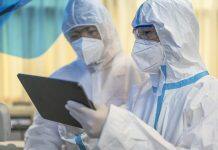
More than 87,000 scientific papers on coronavirus since pandemic
Scientists from around the world have published more than 87,000 papers about coronavirus between the start of the COVID-19 pandemic and October 2020, a new analysis shows.
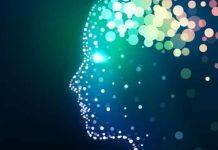
Evolution wired human brains to act like supercomputers
Scientists have confirmed that human brains are naturally wired to perform advanced calculations, much like a high-powered computer, to make sense of the world through a process known as Bayesian inference.