
























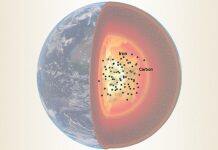
Earth’s core may contain up to 95% of planet’s carbon
New research from Rice University and Florida State University suggests Earth’s core contains up to 95% of the planet’s carbon.

Winning UC interns set the PAC
Honing professional skills before even graduating and trying out career options were a couple of the benefits of an internship, according to the co-winners of the inaugural PACE internship Excellence Prize.

Why uni students still find on-campus experience valuable
Universities have always been more than just institutions of academic instruction.

Scientist’s 50-year study reveals climate change and avian flu impact on UK seabirds
A scientist who has dedicated his life to studying seabirds has revealed how climate change has led to mass mortality events and altered breeding times, in one of the world’s longest running studies of its kind.

People with depression see no immediate change from common GP assessment, study shows
But PHQ-9 questionnaire used to monitor primary care patients did reveal benefits across six months.

Bristol researchers receive funding to help make quantum internet a reality
The University of Bristol will be involved in two projects announced as part of a £12m funding boost from Innovate UK to pioneer the quantum internet of the future.
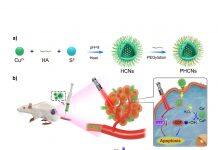
UM-developed new nanozyme technology can help improve effectiveness of immunotherapy
A research team in the University of Macau’s (UM) Faculty of Health Sciences (FHS), led by FHS Associate Professor Zhao Qi, has developed a new nanozyme technology that can enhance...

Prestigious Fellowship for novel Brain Cancer Research
Associate Professor Charles Unsworth from the Department of Engineering Science has been awarded a Royal Society of New Zealand James Cook Research Fellowship.

UMD-led Study Could Offer Hope to Pompe Disease Patients
Pompe disease is a rare genetic disorder that disables heart and skeletal muscles and can lead to early death if untreated. The only available treatment is enzyme replacement therapy that...

Warning signal for volcanic eruptions could be a life-saving discovery
Hidden patterns in seismic signals could help forecast eruptions and prevent loss of life on volcanoes, according to pioneering University of Canterbury research spurred by the deadly Whakaari (White Island) eruption.