























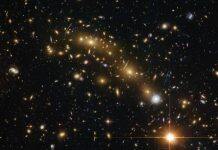
Cosmic dawn occurred 250 to 350 million years after Big Bang
Cosmic dawn, when stars formed for the first time, occurred 250 million to 350 million years after the beginning of the universe, according to a new study led by researchers at UCL and the University of Cambridge.

Study Reveals DNA Secrets of 100 Tomato Types
Source: Office of Communications, Johns Hopkins University
Study Reveals DNA Secrets of 100 Tomato Types

Professor Grant Macaskill appointed as new Lightfoot Professor of Divinity
We welcome Professor Grant Macaskill to our University as our new Lightfoot Professor of Divinity. He will join our leading Department of Theology and Religion in September.

Harnessing AI to help pinpoint cancerous tumours
Engineers from the University of Waterloo are harnessing artificial intelligence to help doctors better see and control a non-invasive cancer treatment and, in the process, save lives.

UNSW launches 2021 Australian Mental Health Prize
Chronic underinvestment in child mental health highlighted as nominations open for the 2021 Australian Mental Health Prize.

Reducing carbon emissions from waste disposal
Although disposing solid waste by incineration greatly reduces the amount of non-recyclable solid waste and generates energy at the same time, it produces carbon dioxide that contributes to greenhouse gas emissions.

CityU secures HK$23m funding from two RGC Research Fellow Schemes
City University of Hong Kong (CityU) has been granted more than HK$23 million in research funding from the inaugural Senior Research Fellow Scheme (SRFS)...

University of Warwick named as one of the UK’s Top 10 Universities by the...
The University of Warwick has been placed 8th in the Guardian University Guide 2023.

University of Waikato installs the world’s most advanced AI System
New Zealand’s most powerful supercomputer for artificial intelligence applications has been installed at the University of Waikato as part of its commitment...

McGill No. 1 in Canada in 2026 QS World University Rankings
McGill University is Canada’s top university, according to the 2026 QS World University Rankings. Worldwide, it placed 27th out of 1,500 universities ranked, putting it in the top two per cent of institutions globally.