



















Massey alumnus wins Booker Prize 2022
After achieving notable success with his 2010 debut novel, Chinaman: The Legend of Pradeep Mathew, Mr Karunatilaka’s long-awaited second novel has accumulated praise from critics and the Booker judges alike.

The low-cost widely available drug that could fight COVID-19
A widely available and affordable drug, heparin, limits lung damage when inhaled by COVID-19 patients, according to world-first findings by researchers from The Australian National University (ANU).

The connection between sleep and Parkinson’s disease
Parkinson’s disease is commonly associated with shaking and slow movement, but these symptoms are only the tip of the iceberg. For some patients, a disrupted sleep schedule is their primary and most life-affecting symptom.

New study finds brake pad emissions can be more toxic than diesel exhaust
A study by the University of Southampton has found microscopic particles emitted from certain types of commonly fitted brake pads can be more toxic than those found in diesel vehicle exhaust.

Catalyst for more efficient chemical production on the horizon
An innovative technique is being developed by scientists that could allow Australia to lead the way in more sustainable manufacturing of fuels and chemicals.

Dobson Centre receives $3M gift to bolster entrepreneurship at McGill
As the McGill Dobson Centre for Entrepreneurship plans to scale up its programming, it has announced a new $3-million gift from the John Dobson Foundation...

Top specialist to lead women’s and children’s health research institute
A world-renowned reproductive biomedical specialist whose research is helping to improve health outcomes for mothers and babies has been named as the new Director for the University of Adelaide’s Robinson Research Institute (RRI).

Good oral health reduces risk of fatal outcomes from COVID-19
Gum disease linked to increased rates of complications, hospitalization, and death among patients with severe cases of COVID-19.
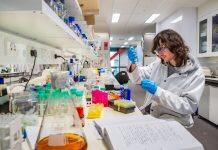
Unravelling the biomolecular secrets of bacteria
Source: University of Canterbury
UC Doctoral Student James Titterington (pictured) studies under Dr Allison in his research into...

The University of Manchester places 56th in Times Higher Education World University Rankings
The University of Manchester has been ranked 8th in the UK and 56th in the world in the Times Higher Education (THE) World University Rankings 2026. The prestigious rankings evaluate more than 2,000 institutions from 115 countries and territories.