




















World-leading researchers and charities are calling on countries attending global plastic pollution treaty negotiations (INC-5.2) to agree legally-binding commitments, as a new report synthesizing the current state of knowledge highlights the growing risk to human, wildlife and environmental health.
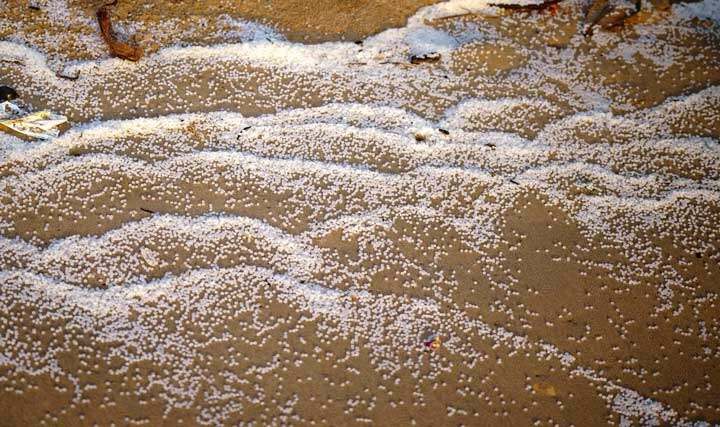
WWF’s new report conducted in collaboration with the University of Birmingham, titled: Plastics, Health, and One Planet, synthesizes almost 200 pieces of the latest and most notable peer-reviewed research on the potential risks that plastic pollution – especially micro- and nanoplastics (MnP) and associated high-risk chemicals – poses to human and environmental health.
The new report is published ahead of governments from around the world meeting in Geneva for the final global plastic pollution treaty negotiations (INC-5.2). Professor Stefan Krause and the team from the Birmingham Plastics Network who produced the report with WWF show that MnP, as well as plastic additives, are associated with a range of biological effects. These include endocrine disruption and hormone-related cancers – such as breast and testicular cancer, reproductive and fertility impairments, and chronic respiratory conditions.
“The precautionary principle has guided multiple international agreements with great success, notably the 1987 Montreal Protocol, when countries acted decisively on ozone-depleting substances before the science was fully settled, preventing millions of cases of skin cancer and facilitated the restoration of the ozone layer.”
–Professor Stefan Krause – University of Birmingham
While research continues to evolve, the report argues that current evidence sufficiently justifies why the precautionary principle – acting where credible risks are identified, even in the absence of absolute scientific certainty – must be invoked to minimise future harm.
Professor Stefan Krause, from the University of Birmingham, said: “The precautionary principle has guided multiple international agreements with great success, notably the 1987 Montreal Protocol, when countries acted decisively on ozone-depleting substances before the science was fully settled, preventing millions of cases of skin cancer and facilitated the restoration of the ozone layer.
“Building on this precedent, we urge governments and negotiators to deliver a science-based, legally binding treaty that not only tackles plastic pollution at its roots by including global bans and phase outs of the most harmful products and chemicals, but also makes protecting human, wildlife and environmental health a core function.”
The meeting of governments on August 4 comes after previous attempts to finalise a global plastic pollution treaty have failed to conclude by consensus while every day 30,000 tonnes of plastic finds its way into the world’s oceans.
WWF, supported by the evidence from the University of Birmingham’s Plastic Network are calling for negotiations in Geneva to conclude with a treaty built on specific binding rules supported by most countries to be able to effectively tackle global plastic pollution. This must include:
- global bans on the most harmful plastic products and chemicals;
- global product design requirements to enable a non-toxic circular economy;
- financial and technical support for developing countries to ensure effective implementation and;
- mechanisms to strengthen and adapt the treaty over time.
Zaynab Sadan, Global Plastics Policy Lead, WWF said: “In a world of shifting politics, these negotiations are on a knife edge. The ambitious majority must now forge their own path to a meaningful treaty through voting or forming a majority coalition. By rejecting bad-faith obstruction and leveraging their strength in numbers, the ambitious majority can build a treaty that helps protect people now and for generations to come. They have the support and they have the tools. Now they need to deliver.”