













Rapid response to protect penguins from bird flu
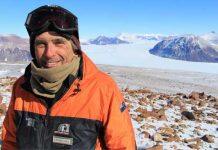
Professor Craig Cary wasn’t planning to spend part of his 2022/23 Antarctic deployment trekking around a penguin colony, collecting poo samples. Fortunately for the penguins, a rapid response to the threat of bird flu resulted in exactly that.

Memory in a metal, enabled by quantum geometry
The emergence of artificial intelligence and machine learning techniques is changing the world dramatically with novel applications such as internet of things
Queen Mary researcher receives major funding award
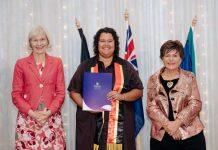
Philip Eaton, Professor of Cardiovascular Biochemistry at Queen Mary University of London, has been awarded €2.5 million by the European Research Council (ERC) to help tackle cardiovascular disease.
Heated rivalries for pollinators among arctic plants
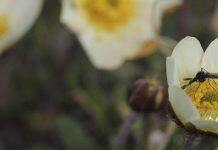
Insect pollination is as important to Arctic plants as it is to plants further south.
Understanding how cancer cells migrate paves the way for targeted therapies
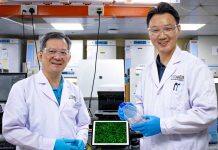
Cancer is a leading cause of death worldwide, accounting for approximately one in six deaths, with metastatic cancers making up more than 90 per cent of cancer-related deaths.

McMaster University Continuing Education to offer micro-certification in data analytics
McMaster University Continuing Education and the National Institutes of Health Informatics (NIHI) have launched an online...

Online tool found to be effective at assessing dementia risk
Scientists hope the new tool could be used to make it easier for GPs and patients to get information on dementia risk factors.

Scientists find upper limit for the speed of sound
The result - about 36 km per second - is around twice as fast as the speed of sound in diamond, the hardest known material in the world.
Training more plant experts with a new botany minor
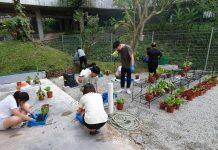
The NUS Department of Biological Sciences (DBS) is launching a new botany minor in August 2023 for the Academic Year 23/24.
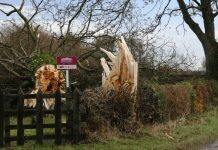
Predicting tornadoes on UK cold fronts for the first time
Weather forecasters can more accurately predict when a tornado is likely to hit the UK thanks to a new tool devised in a partnership between the University of Leeds and the Met Office.