


















Award-winning author and essayist Luke Carman has been announced as the 2025 Judy Harris Writer-in-Residence Fellow at the University of Sydney’s Charles Perkins Centre.
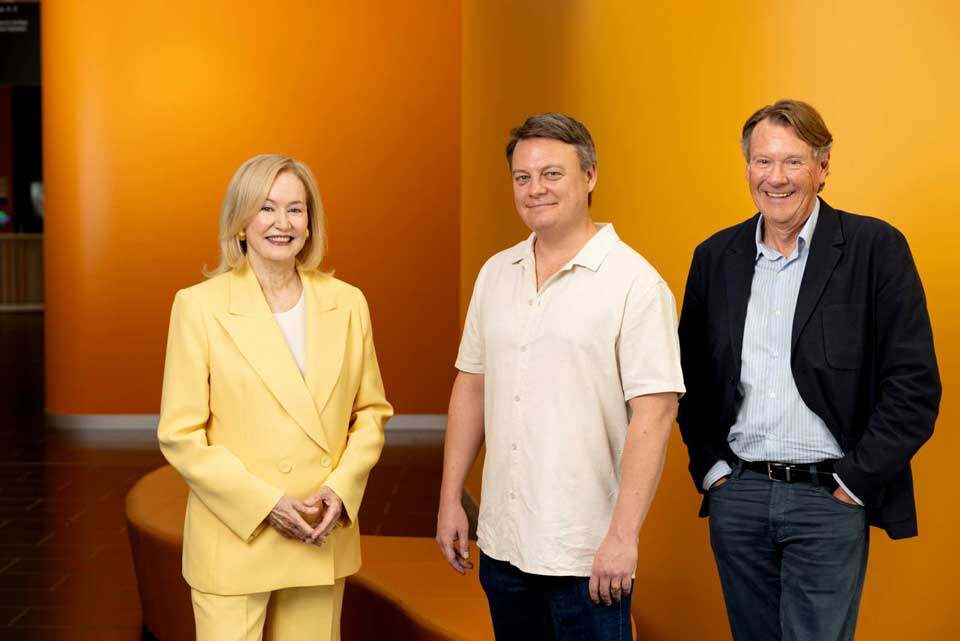
Carman, a Western Sydney writer whose extensive body of work explores Australia’s cultural margins, grapples with mental illness and interrogates the intricacies and ironies of the writer’s condition receives $100,000 to support a year-long residency at the Charles Perkins Centre.
During the residency he will work on a new novel titled A Quiet Desperation, building on his previous writing examining the intersections between mental health, social disconnection, and the search for meaning in contemporary life.
“I started writing initially unconscious of my motivations, desires or goals, yet each of the three times I’ve applied for the Charles Perkins Centre writer residency have been transformative,” Carman said.
“Going through the application process forces me to pause and ask myself: why do I write? What am I trying to accomplish with my writing, and how can I use my writing to benefit others?”
Now in its ninth year, the Judy Harris Writer-in-Residence Fellowship is a pioneering initiative that connects leading Australian creative writers with global health researchers to address complex health and social challenges through literature.
“I see the Charles Perkins Centre as a multi-disciplinary organisation bringing together a range of experts to make people well, to make the culture well, and to make society well,” Carman said.
“Ultimately what a great writer should aspire to is to find terms for the moment that they’re in, and ideally to make people well on a scale outside of themselves.”
Writing from the margins
Carman’s work has long focused on life on the margins, whether geographically, socially, or psychologically. His writing, including award-winning works such as An Elegant Young Man, Intimate Antipathies, and An Ordinary Ecstasy, is celebrated for its experimental style and distinctive voice that captures the rhythms and contradictions of suburban life in contemporary Australia, as well as its ability to articulate the experience of being outside the dominant cultural narrative.
“I’ve always tried to capture a poetics of being outside belonging and living on the margins, disconnected from the social fabric,” he said.
“Creative writing offers an alternative world where the language is available to make sense of the complexities of life, from the comorbid experiences of social disadvantage to chronic mental illness and self-destructive ways of being.
“My hope is that through collaboration with the Charles Perkins Centre – by drawing on its immense wealth of critical expertise and knowledge – there will be an opportunity to move beyond representing the poetics of marginalised experience, into a genuine distillation of how the neurological side of this life is experienced.”
Carman’s project aims to speak to the broader societal crises of our world, from the collapse of shared narratives to the alienation felt by younger generations.
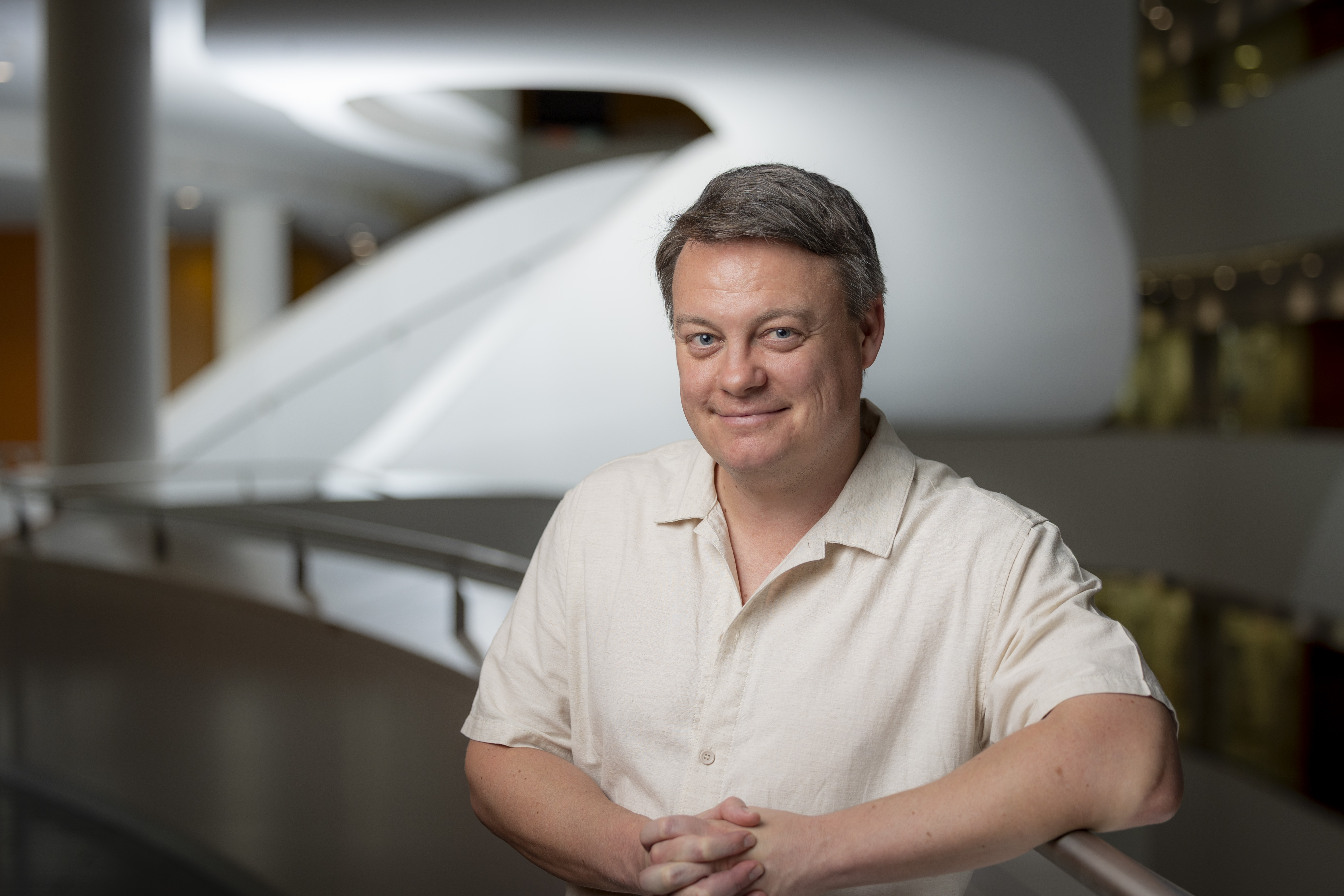
2025 Charles Perkins Writer-in-Residence Luke Carman. Photo: Michael Amendolia
“Everywhere you look, an architectonic shift is underway,” Carman said. “Faith in the international rules-based order is crumbling. Western unipolarity is collapsing. And beneath it all runs a deeper anxiety: that humanity itself will be supplanted as the supreme intelligence on Earth by the very Promethean creation we’ve unleashed – AI.
“There’s a quiet desperation among all of us but particularly the younger generations, who are gazing into a spiritual wasteland they feel no connection to. The panic is palpable – we’re in the midst of a fundamental reorientation, scrambling to identify our first principles. We’re asking ourselves which pillars of this crumbling architecture are worth preserving and which we should let fall. And the urgent question beneath it all is if any of it can still stand.”