
























Rapid transit and the case for a congestion charge
Improving Auckland’s public transit network isn't enough to reduce vehicle travel. Further deterrents to driving, such as a congestion charge, will help meet the city’s emissions reduction goals, say researchers.
Methamphetamine detected in downtown Auckland air pollution
Meth, nicotine, caffeine and THC detected in Customs Street air in groundbreaking study.

Global COVID-19 treatment trial shows current antivirals are of little benefit to hospitalized patients
In just six months, the world’s largest randomized control trial on COVID-19 therapeutics has generated conclusive evidence..

The University of Warwick marks 60 years with major printmaking exhibition
Mead Gallery exhibition celebrates the enduring power of printmaking with 160 works by iconic artists including Andy Warhol, David Hockney, Lubaina Himid and Tracey Emin.

Celebrated animation and games experts to speak at international conference
Big names in animation and games are set to share insight into their industries as part of an international conference to be hosted by Teesside University this summer.

Stemming the tide of invasive weeds with world-first herbicide capsules
An innovative herbicide delivery system could revolutionise the way agricultural and environmental managers battle invasive weeds.
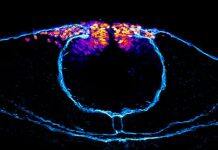
How Stem Cells Choose their Careers
In the laboratory of Marianne Bronner, Albert Billings Ruddock Professor of Biology and Biological Engineering, researchers focus on a particular population of stem cells...

ZJU scientists discover the “Golden Baton” for regulating social interaction
Cortical network activities underlying normal human behaviors depend for the main part on an exquisite interplay between excitation and inhibition.

UC professors’ exceptional contribution recognised
Outstanding professors who have retired from the University of Canterbury (UC) over the past year but continue to contribute and inspire have been acknowledged at a celebration event.

Almost half of people with common heart arrythmia die within 10 years of hospitalisation
Forty-five per cent of patients admitted to hospital for atrial fibrillation (AF) in Australia and New Zealand die within a decade, according to University of Queensland research.