







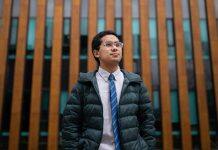
With Helsinki as his first stop, University of Toronto grad charts a career path...
Andi Darell Alhakim came a long way to study at the University of Toronto Mississauga, travelling from his home in Indonesia.
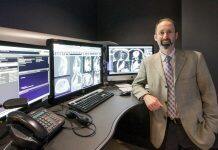
University of Alberta study examines how SARS-CoV-2 affects the body’s vital organs
Research involving Alberta patients will help clinicians better understand long-term effects of COVID-19.
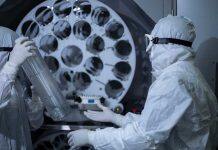
Canadian Pandemic Preparedness Hub receives more than $115M to boost Canada’s capacity for home-grown...
The Canadian Pandemic Preparedness Hub (CP2H) has been awarded more than $115 million to boost Canada’s capacity to develop and manufacture life-saving biotherapeutics...

PLAN helps vulnerable parents by bridging the gap
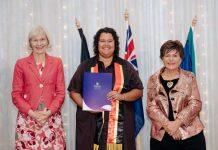
A project developed to help parents struggling with domestic violence, homelessness, housing instability, unemployment, mental health issues and financial hardship has transformed lives.

Astrophysicist decodes rings of stardust in outer space
Striking images show what happens when two stars' winds collide, says Dr Jan Eldridge.
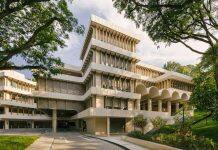
Yusof Ishak House reopens as the epicentre of student life at NUS
NUS celebrated the official reopening of Yusof Ishak House (YIH) on 15 October 2025, following a three-year rejuvenation.
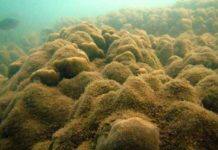
UQ to create new coral reef protection tool
University of Queensland researchers are developing a web-based management program capable of mapping ocean water pollution almost as it happens.
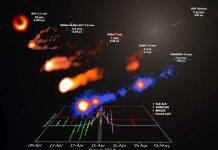
McGill researchers help uncover rare gamma-ray flare from a distant black hole
A high-energy gamma-ray flare from the super-massive black hole in the Messier 87 (M87) galaxy was observed in 2018 for the first time in nearly a decade, thanks to an international effort involving McGill University researchers.
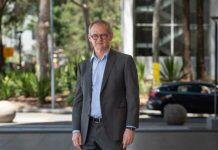
UNSW chemist honoured by Australian Academy of Science for decades-long achievements
Professor Justin Gooding has been recognised for his innovative work, including commercialising one of the most used analytical medical devices in the world, the blood glucose meter.

HKBU deploys new AI-enhanced COVID-19 alert system
Researchers at Hong Kong Baptist University (HKBU) have integrated artificial intelligence (AI) technology with BU-Trace, the COVID-19 alert system (the System) they have developed.