















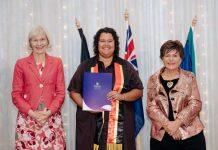






BU Business School awarded the Small Business Charter Award
The award recognises the Business School's outstanding contribution to supporting small businesses, student entrepreneurship, and the local economy.

Participants needed for study of promising drug for hand osteoarthritis
Patients with painful hand osteoarthritis are needed to test an existing drug that showed promising results in a trial led by Monash University and Alfred Health.
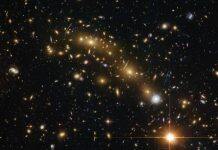
Cosmic dawn occurred 250 to 350 million years after Big Bang
Cosmic dawn, when stars formed for the first time, occurred 250 million to 350 million years after the beginning of the universe, according to a new study led by researchers at UCL and the University of Cambridge.

Monash University pharmaceutical scientists honoured in NHMRC Research Excellence Awards
Two Monash University scientists are recipients of prestigious Research Excellence Awards from The National Health and Medical Research Council (NHMRC) of Australia...

WA Health Hackathon Week 2021 is here
Ready to explore digital and data-driven solutions to real-world healthcare challenges?
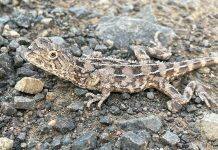
Saving Queensland’s earless dragons
Remotecameras and conservation dogs will be deployed as part of a University of Queensland research project aiming to conserve four threatened Queensland reptile species.
UQ leads climate action as first Australian university to provide Carbon Literacy training
Helping individuals and organisations tackle the climate crisis is the focus of an Australian-first training program adopted by The University of Queensland.

Research initiative to build collaborative and creative AI futures
A £2.4 million initiative has been launched to help organisations develop solutions for pressing questions around the responsible use of artificial intelligence (AI).

UC third in New Zealand in Academic Ranking
Recently released, the 2021 ShanghaiRanking (AWRU) have ranked the University of Canterbury in the 401-500 ranking group. The University has retained its ranking group this year placing it third equal in Aotearoa New Zealand.

Astronomers discover new Earth-sized world orbiting an ultra-cool star
A new, Earth-sized planet orbiting an ultra-cool red dwarf star, has been detected by an international team of astronomers – just 55 light years away.