








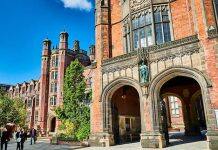





Accounting at Milgard: Past, Present, Future
The MAcc Direct program was introduced to remove some of those barriers by guaranteeing admission and providing a scholarship to deserving students; this year alone 60 students have been offered this opportunity.
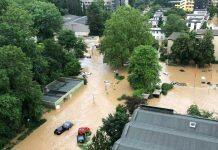
£1m funding to help forecast climate tipping points
An Edinburgh researcher has been awarded £1m to develop new ways to forecast when Earth’s climate systems may cross critical tipping points.
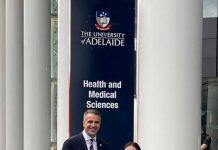
Nation-leading dental trailblazer humbled by royal invitation
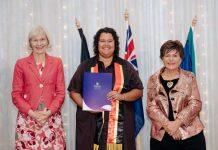
University of Adelaide titleholder and alum Dr Trudy Lin says she is incredibly humbled and honoured to be invited to pay her respects to Queen Elizabeth II.
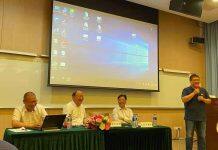
UM holds roundtable meeting on the problem of transcendence in phenomenology and Chinese philosophy
The Department of Philosophy and Religious Studies, Faculty of Arts and Humanities, University of Macau (UM), and the Departments of Philosophy at Sun Yat-Sen University’s Guangzhou and Zhuhai campuses...

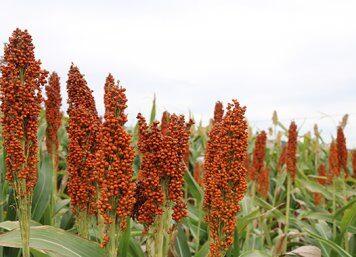
Rare resurrection plant may hold clues for drought tolerant crops
A rare plant that can ‘resurrect’ itself after prolonged periods without water could hold clues to improve drought resistance in crops.

Dr Jemma Geoghegan only the second woman to win Prime Minister’s Emerging Scientist Prize
The University of Otago’s Dr Jemma Geoghegan is only the second woman to have ever won the Te Puiaki Kaipūtaiao Maea Prime Minister’s MacDiarmid Emerging Scientist Prize.

Multi-million kronor foundation creates innovation and entrepreneurship prize at Uppsala University
A new foundation has been established with founding assets of SEK 20 million: “Uppsala University Innovation and Entrepreneurship Prize Foundation”.

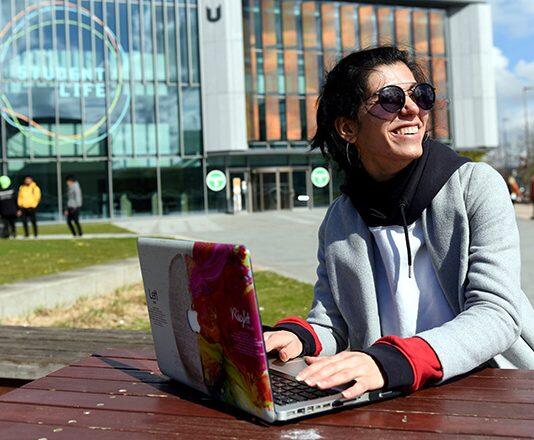
Students explore the art of togetherness in a pandemic lockdown
Lockdowns were lonely and isolating for many, but an imaginative bunch of Bachelor of Arts students discovered how their creative projects fostered a sense of togetherness.

UNSW improves THE World University ranking to 83rd spot
The University is one of six Australian institutions ranked in the top 100 listed by Times Higher Education.
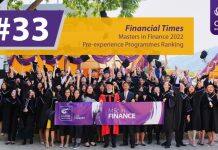
CUHK Business School Remains the 33rd Worldwide in the Financial Times Masters in Finance...
The Chinese University of Hong Kong (CUHK) Business School’s Master of Science (MSc) Programme in Finance ranks 33rd worldwide and 4th in Asia in the Financial Times Masters in Finance 2022...