






















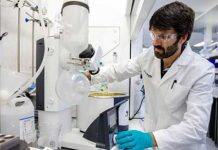
Funding allows QEDDI to open to external drug discoveries
The University of Queensland’s small molecule drug discovery facility will open its doors to researchers from across Australia for the first time thanks to a National Collaborative Research Infrastructure Strategy (NCRIS) funding injection.

Study shows impact of pandemic on families with seriously ill children
Many parents of children with chronic illnesses felt hospitals were unsafe during the COVID-19 pandemic and took to social media to find information relevant to them, a Southampton-led study suggests.
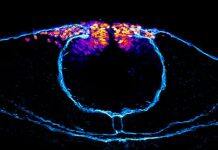
How Stem Cells Choose their Careers
In the laboratory of Marianne Bronner, Albert Billings Ruddock Professor of Biology and Biological Engineering, researchers focus on a particular population of stem cells...

Landmark move to bring new jobs and opportunities to Arden Cross
Arden Cross Ltd has signed a Memorandum of Understanding (MOU) with both University Hospitals Birmingham (UHB) and the University of Warwick to explore opportunities...

Physics student awarded Gates scholarship to Cambridge
University of Auckland physics student Caleb Todd is the sole New Zealander to win a coveted Gates Foundation 2022 scholarship to Cambridge University.
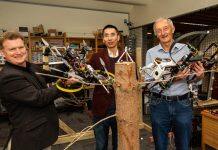
Ten University of Canterbury research projects gain MBIE funding
Ten University of Canterbury research projects tackling the big issues have been green-lit with funding worth $23 million.

New Kavya Prize winner announced
Uma Nada-Rajah has been named winner of the first Kavya Prize, a new Scottish literary prize celebrating published work by Scottish writers of colour.

Regenerative heart valves and blood vessels a step closer
A number of years of careful laboratory tests have now led to the first pre-clinical tests of implantable biodegradable heart valves and stents.
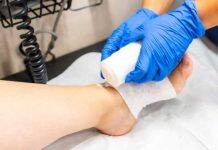
Revolutionary chronic wound treatment could help millions
A team of international scientists has developed an effective treatment for preventing infection in chronic wounds that does not involve antibiotics.
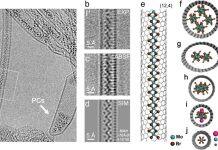
The power of confinement: How tiny nanotubes can squeeze new materials into being
An international research project, led by The University of Warwick and University of Lille, has used nanotube compression to transform the underlying chemistry and physics of a compound, creating a promising new one-dimensional material.