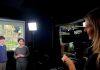






















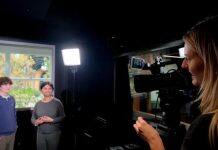
New Media Production Studios unveiled
Students will have access to the latest media, communications and journalism technology following the opening of the University of Melbourne's first Media Production Studios.

Rocking celebration honours world-changing medical innovation
The University of Western Australia has marked the 20th anniversary of Barry Marshall and Robin Warren’s Nobel Prize for Physiology or Medicine with a ‘Rocking Celebration...

Asian hornets have a unique sound – and that could be the key to...
The frequency and volume of the sound from the nests of yellow-legged hornets – or Asian hornets – has been established for the first time by researchers at the University of Southampton.

First of its kind project to investigate the impact of sleep on peak performance...
A first of its kind project led by Monash University is investigating the impact of sleep and circadian disruption on peak performance and recovery in elite female athletes to develop a sleep.。。

Global networks advance wildlife research
Kenyan students have demonstrated how Artificial Intelligence can enhance the study of endangered animals.

Microearthquakes in New Zealand’s Southern Alps more common during spring and summer
Changes in water levels beneath Earth’s surface caused by glacier snowmelt and rainfall could be responsible for triggering small but frequent earthquakes in New Zealand’s central Southern Alps...

Prestigious UK teaching excellence awards recognise Bristol’s outstanding educators
The University of Bristol has been awarded three prizes in the National Teaching Excellence Awards announced on 7 August by Advance HE.

Understanding the maternal microbiome
The microbiome -- the trillions of bacteria, fungi and viruses both good and bad living in your body -- and the role it plays in women's health is the focus of this month's University of Adelaide Research Tuesdays lecture.

Key genetic differences found in people with ME/CFS
Scientists have discovered that people diagnosed with ME/CFS have significant differences in their DNA, offering the first robust evidence that genes contribute to a person’s chance of developing the disease.

New cosmic discovery challenges galaxy formation theories
An international team of astronomers have discovered a remarkably clumpy rotating galaxy that existed just 900 million years after the Big Bang, shedding new light on how galaxies grew and evolved in the early Universe.