















Muscle Pain and Energy-Rich Blood: Cholesterol Medicine Affects the Organs Differently
Contrary to expectation, treatment with statins has a different effect on blood cells than on muscle cells, a new study from the University of Copenhagen reveals.

University spinout tech companies recognised in national awards
Three tech companies spun out of research from Waipapa Taumata Rau, University of Auckland, have been recognised for outstanding innovation, contribution, and success at the 2022 NZ Hi-Tech Awards.
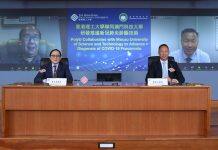
PolyU collaborates with Macau University of Science and Technology to advance diagnosis of COVID-19...
(From left) Dr Johnson LAU, Adjunct Professor of the Department of Applied Biology and Chemical Technology of PolyU; Prof. Manson FOK,...

UOW researchers awarded $7M for climate and decarbonisation projects
Chris Gibson and Sharon Robinson honoured with ARC Laureate Fellowships for groundbreaking research projects

Urgent need for anti-smoking campaigns to continue after pregnancy
Curtin University research has found quit support for smoking mothers should continue even after their first babies are born, given that many of those women will become pregnant again, and that quitting can substantially reduce the risk of future preterm births.

UM’s 35th Portuguese Language Summer Course ends with success
The 35th Portuguese Language Summer Course, organised by the University of Macau (UM) Department of Portuguese, has ended with success on 23 July.

Lancaster retains top 10 position in The Times and The Sunday Times Good University...
Lancaster has retained a place in the top 10 UK universities in The Times and The Sunday Times Good University Guide 2021...

Innovative projects boosted by State funding
Projects to repair ruptured eardrums, understand genetic variants, improve cochlear implants, boost the immune system to eliminate cancer cells...

UM appoints Prof Mok Kai Meng as vice rector
The University of Macau (UM) has appointed Prof Mok Kai Meng as its vice rector (student affairs), after a global recruitment process and a rigorous selection process.

Eye drops set to reduce surgery
A new Waipapa Taumata Rau, University of Auckland spin-out company, TheiaNova, is working to introduce a groundbreaking, non-invasive treatment for the eye disease keratoconus.