















Missing a deadline has a bigger impact than you might think: Study
People who were told work was submitted late considered it to be of lower quality than the same work submitted early or on time.

£1.13m grant to support Durham University carbon reduction project
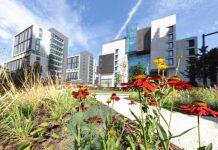
Durham University has been awarded a £1.13m grant for a major project to help reduce Carbon emissions at one of its landmark buildings.

After a year of digital learning and virtual teaching, let’s hear it for real...
Can children develop a love of reading by sitting alone with an e-book? In a new article on The Conversation, Associate Professor Kathryn MacCallum argues that real books are more engaging.

Lecture by Julia Gillard explores childhood education and care
In this year’s Julia Gillard Public Lecture, the former Prime Minister will explore the importance of delivering quality childhood development support in South Australia.
Lab-grown ‘mini-bile ducts’ used to repair human livers in regenerative medicine first
Scientists have used a technique to grow bile duct organoids – often referred to as ‘mini-organs’ – in the lab and shown that these can be used to repair damaged human livers.

Mid-way to COP29: Monash joins the international climate action community in Germany for the...
Monash was honoured to join delegates from 198 countries at the Bonn Climate Conference in Germany in preparation for COP29.
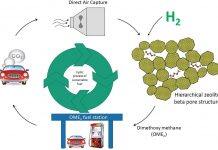
The path to achieving net-zero liquid fuel
Researchers from Monash University and Hokkaido University have developed a method that converts carbon dioxide into a diesel-range fuel and has the potential to produce a net-zero liquid fuel alternative to power cars more sustainably.
A wildlife conservation hospital for south-western Sydney and surrounds
Expanded capacity will allow University of Sydney veterinarian staff to provide specialist care for Australian native species.

New Tuberculosis treatment could save millions of lives
World-leading scientists from the University of St Andrews reveal a new Tuberculosis (TB) therapeutics that could shorten the treatment of the disease by up to two months, potentially saving millions of lives.

Weaving Indigenous knowledge with scientific research: a balanced approach
Insights from bicultural research can enhance practical applications from a palaeotsunami database to land-use decisions, according to a new review in Earth Surface Dynamics