



















Kiwi scientists investigate Sky-Tower’s weird effect
When a scientist noticed the Sky-Tower appeared squat from close-up and tall from far away, he decided to investigate.

Male infertility is more common than you may think. Here are five ways to...
Infertility is often thought of as a female problem, but one in three IVF cycles in Australia involve male infertility.
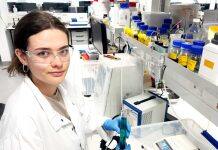
New researching charging the way for national power savings
An environmentally friendly and safer alternative to lithium-ion batteries, redox-flow batteries are used for grid storage, but they are big —usually the size of a shipping container—slow and expensive.

AI assist for COVID-19 diagnosis
The new AI system uses a deep learning-based algorithm that is able to quickly and accurately distinguish between COVID-19 cases, normal cases, and pneumonia in X-ray images.
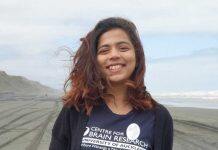
Rutherford support for promising scientists
Investigations into brain cancer prevention and the origins of our solar system have seen two scientists from Waipapa Taumata Rau, University of Auckland awarded prestigious fellowships.
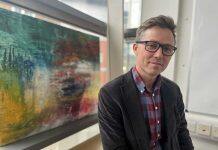
Top specialist to lead women’s and children’s health research institute
A world-renowned reproductive biomedical specialist whose research is helping to improve health outcomes for mothers and babies has been named as the new Director for the University of Adelaide’s Robinson Research Institute (RRI).

Royal recognition for Canterbury computer science lecturer
A Canterbury professor who co-wrote a book about computer science for kids that has been translated into 30 languages has received a 2024 New Year Honour.
Dietary changes could help NZ reach climate targets
Eating less meat and dairy has the potential to help Aotearoa New Zealand reach its climate goals, say the authors of a new study.
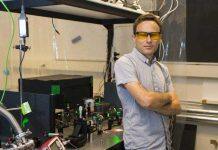
Curious traveller with a quantum ambition
Professor Igor Aharonovich has been welcomed as a 2024 Fellow of SPIE, the International Society for Optics and Photonics; a significant honour that recognises those who have made groundbreaking scientific achievements in the field.
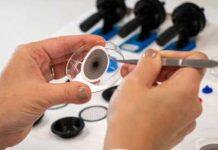
UQ develops tool to identify dust lung disease risk
A new dust testing methodology developed by University of Queensland researchers offers workers better protection from diseases such as black lung and silicosis.