













Massey’s journalism programme among the best of the best
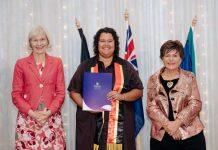
One of the world’s top journalism bodies, the US Accrediting Council on Education in Journalism and Mass Communications (ACEJMC) has voted unanimously to re-accredit the journalism programme at Te Kunenga ki Purehuroa Massey University.
St Andrews students and staff get on board to cut costs and carbon
A pioneering project between the University of St Andrews and bus giant Stagecoach to offer 75% off bus travel during the cost-of-living crisis has saved students and staff almost £700,000...
University of Toronto ranked first in Canada across five subject fields in QS University...
The University of Toronto ranked first in Canada in five broad fields in the latest annual subject ranking by Quacquarelli Symonds, the London-based analytics and insights firm.
New study shows microglia cells colonise the human brain in waves
New research published today by the University of Southampton shows new insight in how our brain develops, that can pave the way for treating neurological disorders.

Architecture students create Urban Village for Late Night Art
A series of artistic projects created by students from the University of Auckland's School of Architecture and Planning will be exhibited as part of Late Night Art, part of Art in the City 2022.
New Kavya Prize winner announced
Uma Nada-Rajah has been named winner of the first Kavya Prize, a new Scottish literary prize celebrating published work by Scottish writers of colour.

Using AI to predict the future of transport and ease congestion
Launched today, a world first project seeks to use artificial intelligence (AI) to predict traffic congestion up to three hours ahead, optimising traffic in large cities and improving road safety as part of the University’s smart cities ecosystem.

Perceived social status tied to cardiovascular risks in women but not in men
Study adds to growing evidence that social and psychological factors uniquely affect women’s heart health, offering new insights into why heart disease presents and progresses differently in women
UWA researchers win inaugural medal for transformational work
Professor Dao-Yi Yu, a researcher at The University of Western Australia and renowned ophthalmologist who led the development of a revolutionary intervention to treat...

Auckland mooters impress in Hong Kong
Oscar Read, Andrew Fu and Isabella Wensley competed against 24 other teams in the 21st Red Cross International Humanitarian Law Moot for the Asia-Pacific Region and took out second place.