






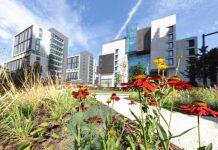





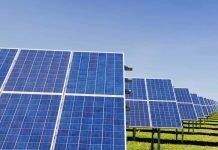
104,000 panel solar farm set to power The University of Manchester
The University of Manchester has signed a landmark new deal that will see up to 65% of its electricity demand supplied through a brand-new renewables project.

McMaster researchers receive $2.6 million for small modular reactor research
Two researchers from the Faculty of Engineering have received a total of nearly $2.6 million to lead research on small modular reactors (SMRs).
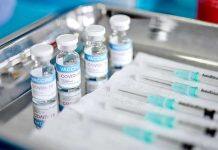
University of Alberta research teams awarded $100 million for pandemic preparedness
University of Alberta researchers will help Canada get ready for the next infectious disease pandemic, thanks to nearly $100 million in new federal research grants to find and make new vaccines, diagnostic tests and treatments against a wide range of threats.
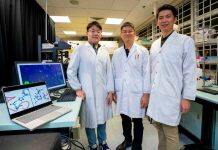
Scientists develop versatile drug delivery system inspired by self-assembling proteins from caterpillars
NTU scientists have developed a versatile drug delivery system, inspired by nature.
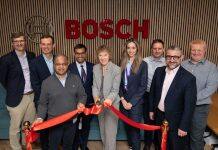
One of the world’s leading technology companies has moved into new premises at the...
Bosch Mobility UK has moved into the i-House at the University of Warwick Science Park, bringing together teams who had previously been based in three separate offices there.

Looking to 2024: Climate change – dire warnings, but also renewed hope for progress,...
The downbeat news on climate change developments seemed only to gather pace in 2023, with the UN’s World Meteorological Office reporting that last year was the hottest observed in 175 years of record-keeping.

Quantum breakthrough: World’s purest silicon brings scientists one step closer to scaling up quantum...
More than 100 years ago, scientists at The University of Manchester changed the world when they discovered the nucleus in atoms, marking the birth of nuclear physics.

Research initiative to build collaborative and creative AI futures
A £2.4 million initiative has been launched to help organisations develop solutions for pressing questions around the responsible use of artificial intelligence (AI).
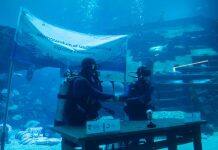
Building climate resilience through a joint research collaboration
Resorts World Sentosa’s (RWS) S.E.A. Aquarium and the Earth Observatory of Singapore (EOS) at NTU Singapore are embarking on a research collaboration that will see the collective efforts of S.E.A. Aquarium and EOS...

Travel emissions show promising drop
Findings by the department of Social Responsibility and Sustainability (SRS) suggest that total CO2 emissions from business travel have fallen from 18,600 to 12,159 tonnes of carbon dioxide equivalent (tCO2e) in 2018/19 compared with 2022/23.