












University will require all undergraduate and graduate students to receive COVID-19 vaccines
Princeton University will require all undergraduate and graduate students enrolled or otherwise present on campus during the 2021-22 academic year to receive, and to provide proof of having received...
OpenAI corporate chaos reveals the war between AI ‘doomers’ and ‘boomers’
Creating two camps in discussions of AI's future - those seeing opportunity versus those seeing a threat - is overly simplistic and could actually be a distraction.
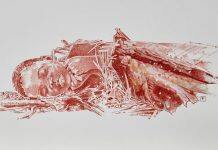
Cave site in Kenya reveals the oldest human burial in Africa
Africa is often referred to as the cradle of humankind – the birthplace of our species, Homo sapiens.
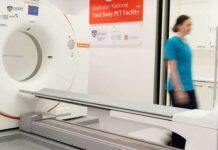
New medical imaging facility to revolutionise research and patient care
The Australian National Total Body PET Facility will drive advancements in cancer studies, neurological disorders, cardiovascular disease and drug development...
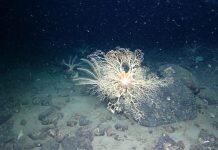
Collaborative study of natural hydrocarbon seep in Canada’s Arctic reveals presence of methane-degrading bacteria,...
Residents of the Nunavut hamlet of Clyde River and the nearby communities have long known about a naturally occurring hydrocarbon seep in Baffin Bay’s Scott Inlet.
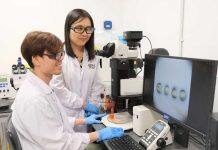
NUS team discovers new method of cultivating human norovirus using zebrafish embryo
Food virologists from the National University of Singapore (NUS) have successfully propagated the human norovirus using zebrafish embryos, providing a valuable platform to assess the effectiveness of virus inactivation for the water treatment and food industries.
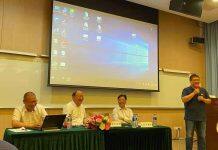
UM holds roundtable meeting on the problem of transcendence in phenomenology and Chinese philosophy
The Department of Philosophy and Religious Studies, Faculty of Arts and Humanities, University of Macau (UM), and the Departments of Philosophy at Sun Yat-Sen University’s Guangzhou and Zhuhai campuses...

Stargazers’ new approach to reshape our understanding of the Universe
An international project mapping millions of galaxies has provided a ‘tantalising’ insight into the mysteries of dark energy and could reshape our understanding of the history of the Universe...

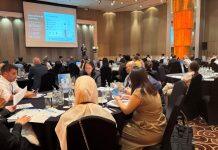
New satellite office expands ASU’s presence in the Middle East
ASU's Thunderbird School of Global Management has opened a new satellite center of excellence in Dubai called the Thunderbird Global Innovation Center in partnership with Dubai International Financial Centre (DIFC)...
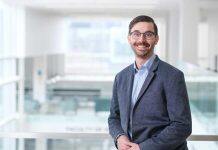
Waterloo researcher recognized for promising osteoarthritis research
Dr. Nikolas Knowles, a researcher in the Department of Kinesiology and Health Sciences, has received a Stars Career Development Award from Arthritis Society Canada...