



















Applications now open for the Intelligent Energy Charitable Trust: £100,000 available to support good...
If so, Intelligent Energy – a company based on the University’s Science and Enterprise Park (LUSEP) – is delighted to announce it will once again be offering £100,000 to support various initiatives helping community groups, young people, sport and lifelong learning.

Molecule find could pave way for new MND drugs
Scientists have discovered a molecule that could aid the development of new treatments for motor neuron disease (MND), a study suggests.

University of Newcastle tips hats to latest cohort of graduates
University of Newcastle students will gather in Callaghan’s Great Hall over the coming days as nearly 2,300 graduates receive their degrees this week.

Manchester astronomers reveal first look from the world’s largest digital camera
Astronomers have revealed the first images from “the most ambitious astronomical survey to date” – a mission that will transform our understanding of the Universe.

UNSW neuroscientist receives an inaugural $1.35m Rebecca Cooper Fellowship
Sylvia Gustin’s research will facilitate spinal cord injury cure and improve therapies for chronic pain.

Parents who face pregnancy loss could shape future support using personal data
Researchers are working with parents who have experienced pregnancy loss to share data which could help shape future maternal care and improve digital support.

University of Canterbury enrolments hit record high last year
Student enrolments at the University of Canterbury hit a record high in 2021 despite the ongoing challenges of the pandemic.

Quantum tech iron test to be developed in partnership with First Nations communities
Scientists who are developing a revolutionary and more accurate iron test are heading to the Northern Territory to gather real-world data to help them design a blood-test device to operate in a range of environments.
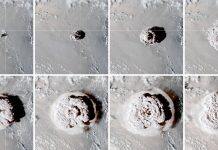
Hunga Volcano eruption and its once-in-a-century atmospheric wave
Hunga Volcano in the Kingdom of Tonga began a new eruptive sequence on 19 December 2021, culminating in the climactic eruption on 15 January 2022.

Most-detailed collision of black holes provides strongest evidence yet to support Hawking’s 50-year-old prediction
An international team of scientists have observed a collision of two black holes, violent and energetic events in the cosmos, in detail never-before-seen.
- Advertisement -