























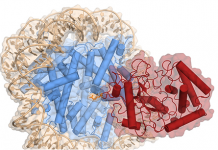
How cGAS is kept bottled up
In higher organisms, detection of DNA in the cytoplasm triggers an immune reaction.

£1.13m grant to support Durham University carbon reduction project
Durham University has been awarded a £1.13m grant for a major project to help reduce Carbon emissions at one of its landmark buildings.

UK Earns ‘Great Colleges to Work For’ Designation, Recognized in 8 Categories
The University of Kentucky is a great college to work for, according to a new survey conducted by Modern Think.

Major funding for genomics project to combat spider mite infestations
A key genomics project led by a Western biologist, which aims to combat infestations of a pesticide-resistant spider mite, has received significant federal funds.

Top admissions experts launch new festival to help applicants choose a Masters program and...
The event will be hosted by Poets&Quants Editor-in-Chief, John A. Byrne, and bestselling MBA author and columnist for Forbes, BBC, and formerly Bloomberg and The Economist, Matt Symonds.

How to apply for studying abroad in New Zealand?
New Zealand has advantages such as high-quality education, a safe and stable environment, a multicultural society, a good quality of life, and opportunities for permanent residency after graduation...

Deep sea coral time machines reveal ancient CO2 burps
The fossilised remains of ancient deep-sea corals may act as time machines providing new insights into the effect the ocean has on rising CO2 levels...

University of Ottawa and Embassy of France in Canada pave way for scientific diplomacy
In a world increasingly shaken by crises and polarized debate, science is more critical than ever, and the concept of scientific diplomacy is taking on added importance.
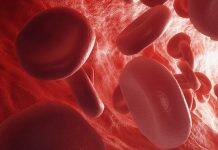
Muscle Pain and Energy-Rich Blood: Cholesterol Medicine Affects the Organs Differently
Contrary to expectation, treatment with statins has a different effect on blood cells than on muscle cells, a new study from the University of Copenhagen reveals.

Vinegar could be secret ingredient in fight against climate crisis
Chemical engineers at Monash University have developed an industrial process to produce acetic acid that uses the excess carbon dioxide(CO2) in the atmosphere, and has a potential to create negative carbon emissions.
- Advertisement -