























The success of Iceland’s ‘four-day week’ has been overstated
Iceland has trialled shorter working hours, not a four-day work week, but there are some positive takeaways, writes Adjunct Professor Tony Veal.

New book celebrates NZ’s ‘six-legged ghosts’
New Zealand insects, whose lives are often invisible to city-dwellers, are put under the microscope in a new, richly illustrated book.

Solving solar puzzle could help save Earth from planet-wide blackouts
Could solar storms knock out the global internet? Yes, but we don't know when or how it could happen. Mathematician Dr Geoffrey Vasil has proposed a new understanding of the Sun's convection zone to help.

Two-dimensional nanomaterial sets record for expert-defying, counter-intuitive expansion
It is a common hack to stretch a balloon out to make it easier to inflate. When the balloon stretches, the width crosswise shrinks to the size of a string.
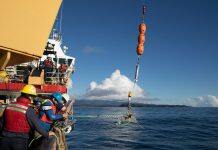
World-class ocean observing gets a boost
An $8.7-million investment into the University of Victoria’s Ocean Networks Canada (ONC) advances ocean-observing infrastructure on all three of Canada’s coasts...

How psilocybin potentially works to reverse the cognitive rigidity that is the hallmark of...
Characterised by pathological weight loss driven by restrictive feeding and excessive exercise behaviours, anorexia nervosa (AN) has one of the highest mortality rates of any psychiatric disease.

$1m in funding for project to cull mouse plagues
South Australian researchers are set to use genetic tools to help find innovative solutions to the devastating mouse plagues that have caused massive economic damage to Australian farmers.

UQ Anthropology museum unveils long-lost Indigenous sculptures
Three sculptures carved by an Indigenous Elder are on display together for the first time in 90 years at an exhibition at The University of Queensland Anthropology Museum.

Psychological impacts of Delta
Languishing, burnout and stigma are all among the possible psychological impacts as Delta lingers in the community, says Dr Dougal Sutherland.

Nature time boosts children’s mental health, especially for those from low-income families
Children who spend more time in natural environments have significantly better mental health, according to new research led by the University of Glasgow.
- Advertisement -