
























Higher-educated and obese people eat less healthy during lockdown
Most Dutch people did not change their diets during the first Covid-19 lockdown, but more overweight and obese people said they ate less healthily...
Review finds almost 20 per cent of COVID-19 patients only show gastrointestinal symptoms
Almost one in five patients with COVID-19 may only show gastrointestinal symptoms, according to a review of academic studies published in the journal Abdominal Radiology.

Meeting the Challenge of Student Mobility in a Global Pandemic
Internationalisation in higher education is facing unprecedented challenges because of the global pandemic Covid-19.
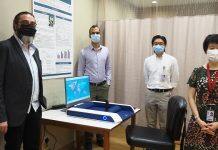
NTU spin-off ARTICARES launches portable arm rehabilitation device for use from hospital to home
A new portable arm rehabilitation robot will help patients to carry out robot-aided therapy at home, allowing them to perform intensive exercises without visiting hospitals...
Study reveals mouth as primary source of COVID-19 infection
A team of researchers led by the University of North Carolina at Chapel Hill and the National Institute of Dental and Craniofacial Research reveals coronavirus...

The flu, a cold, allergies or COVID-19? How to decipher symptoms
Let’s say you have a runny nose, headache and cough. Are they signs of COVID-19 or just a run-of-the-mill common cold?

High blood pressure and its drug treatment unlikely to increase entry of COVID-19 virus...
Fears that people with high blood pressure are more at risk from severe Covid-19 because it is easier for the virus to enter their cells and tissues have been laid to rest...
‘Mini-lungs’ reveal early stages of SARS-CoV-2 infection
‘Mini-lungs’ grown from tissue donated to Cambridge hospitals has provided a team of scientists from South Korea and the UK with important insights into how COVID-19 damages the lungs.

Turning hotels into emergency shelter as part of COVID-19 response limited spread of coronavirus,...
A King County initiative that moved people out of homeless shelters and into hotel rooms earlier this year helped slow the transmission of coronavirus..
Researchers discovered the second ‘key’ used by the SARS-CoV-2 virus to enter into human...
To efficiently infect human cells, SARS-CoV-2, the virus that causes COVID-19, is able to use a receptor called Neuropilin-1...