

















UM-led research team unveils groundbreaking computational encryption with metasurface
A joint research team, formed by researchers of the University of Macau (UM), Wuhan University (WHU), Beijing Normal University (BNU), the University of Hong Kong (HKU)...
CMU Hacking Team Defends Title at MITRE Cybersecurity Competition
For the second year in a row, Carnegie Mellon’s competitive hacking team, the Plaid Parliament of Pwning(opens in new window) (PPP), has taken home the top prize at the MITRE Embedded Capture-the-Flag (eCTF) cybersecurity competition(opens in new window).

Kingston University’s Town House carries off highest accolade in European architecture, winning prestigious EU...
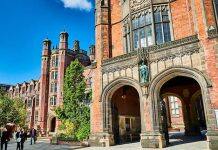
Kingston University's Town House building has been named winner of the EU Prize for Contemporary Architecture – Mies van der Rohe Award, the highest accolade in European architecture.
NTU Singapore scientists develop device to ‘communicate’ with plants using electrical signals
A team of scientists led by Nanyang Technological University, Singapore (NTU Singapore) has developed a device that can deliver electrical signals to and from plants...
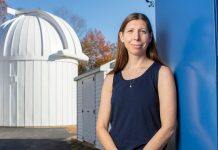
Mini-satellite maker
With her students, aerospace engineer Kerri Cahoy is developing small, affordable “CubeSats” to monitor weather and search for exoplanets.
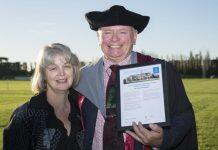
Nominations open for LU medals and awards
Nominations are now open for the 2022 Lincoln University medals and awards, which recognise individuals who have made outstanding achievements in their fields of expertise.
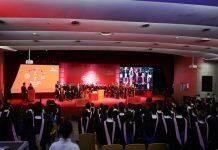
Celebrating the first graduating class of The University of Waikato in China
It was a big day for celebration as staff tuned in virtually to watch students at the University’s joint institute in China cross the stage as the first graduating class.

Smoking associated with increased risk of COVID-19 symptoms
Smoking is associated with an increased risk of COVID-19 symptoms and smokers are more likely to attend hospital than non-smokers, a study has found.

Early-career biostatistics scholar from Brown wins prestigious Packard fellowship
Brown School of Public Health faculty member Lorin Crawford will receive $875,000 over five years to pursue research in statistics, genomics and applied mathematics.
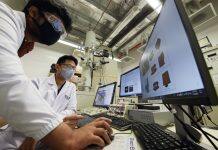
Microscopes and computers join forces to unravel biological mysteries
Researchers at the NUS Centre for BioImaging Sciences (CBIS) have developed a new method to observe materials of low atomic weight, such as biological molecules...