















StratComm connects students with businesses for real-life strategic work
The goal: to develop a strategic internal communications plan for DHL, a global shipping and supply chain logistics company, and Shaden Ahmed, Tracy Beazley-Clark and Sama Elhansi knew they had to do more than simply look at a website, or hold a Zoom meeting.

Strong connections and an uplifting learning environment at UC
With a major in Tourism, Marketing and Management and a minor in te reo Māori, Amiria sees the tourism industry as a platform to tell the stories of tangata whenua, and an opportunity to preserve the history of our tūpuna (ancestors).
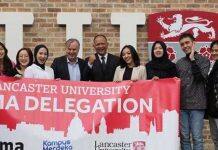
A warm welcome to Indonesian scholarship students
This year’s cohort is the second to join Lancaster University following the launch of IISMA in 2021. The students will be studying at the Lancaster UK campus for Michaelmas term across a variety of disciplines including Management...

UWA two score prestigious international scholarships
Two undergraduates from The University of Western Australia are set to pursue their study dreams in Japan and South Korea after being named as 2023 New Colombo Plan Scholars.

Western athlete competing for Canada at world para championships
In September 2022, Natalie Thirsk set herself a goal: to make it on the Canadian national team for the World Para Athletics Championships.
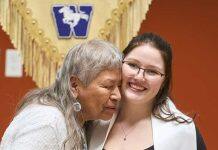
Embracing opportunities key to Western grad’s success
As Misko Kicknosway returns to Western for fall convocation, she’s coming home to the community where she honed the leadership skills she’s now helping to instill in others.
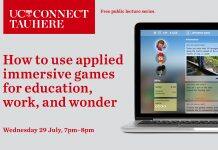
Serious Gaming – Using applied immersive games for education, work and wonder
Computer games are not just for entertainment – they’re seriously powerful tools to solve complex problems, according to a University of Canterbury expert on applied immersive games.

Start your UC MBA this September with a FutureU study grant
If your job has been impacted by COVID-19 and you’re thinking about next steps, now is the perfect time to apply for an MBA at the University of Canterbury (UC).
The genetics of blood: a global perspective
What’s the risk of different human populations to develop a disease? To find out, a team led by Université de Montréal...

NTU Singapore breaks into top 30 in QS Global MBA rankings
Nanyang Technological University, Singapore (NTU Singapore) has made it into the QS Global Master of Business Administration (MBA) Rankings top 30 list this year.